
What is AI Overviews and How Does It Work?
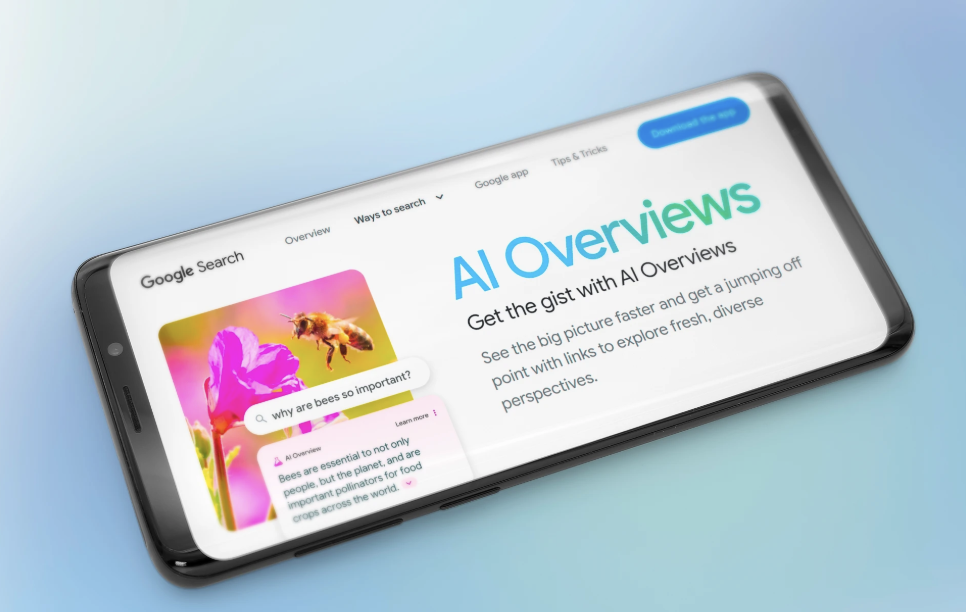
If you’ve recently Googled a question and noticed a neatly summarised answer box at the top of the page, you’ve likely encountered Google’s AI Overviews (AIO). It’s Google’s latest attempt to reshape how we interact with search results, one that uses generative AI to pull insights from across the web and deliver concise, contextual answers directly within the search interface.
How Did AI Overviews Come About?
Google first introduced its AI-powered snapshot feature during Google I/O 2023 under the Search Generative Experience (SGE). Initially limited to Search Labs, the experiment allowed early users to test AI-generated summaries alongside traditional search results. By mid-2024, it was rebranded and rolled out more widely as “AI Overviews.
This shift is part of Google’s ongoing mission to make search more intuitive and conversational. According to Google, the idea is to help users complete more complex tasks faster, like comparing products, planning trips, or understanding multifaceted topics, without needing to click through multiple sites.
Powered by Google’s Gemini models, AI Overviews are designed to understand intent and deliver summarised insights drawn from multiple high-quality sources. Think of it as your AI research assistant, scanning the web and giving you a quick, trustworthy briefing.
Where Do AI Overviews Appear?
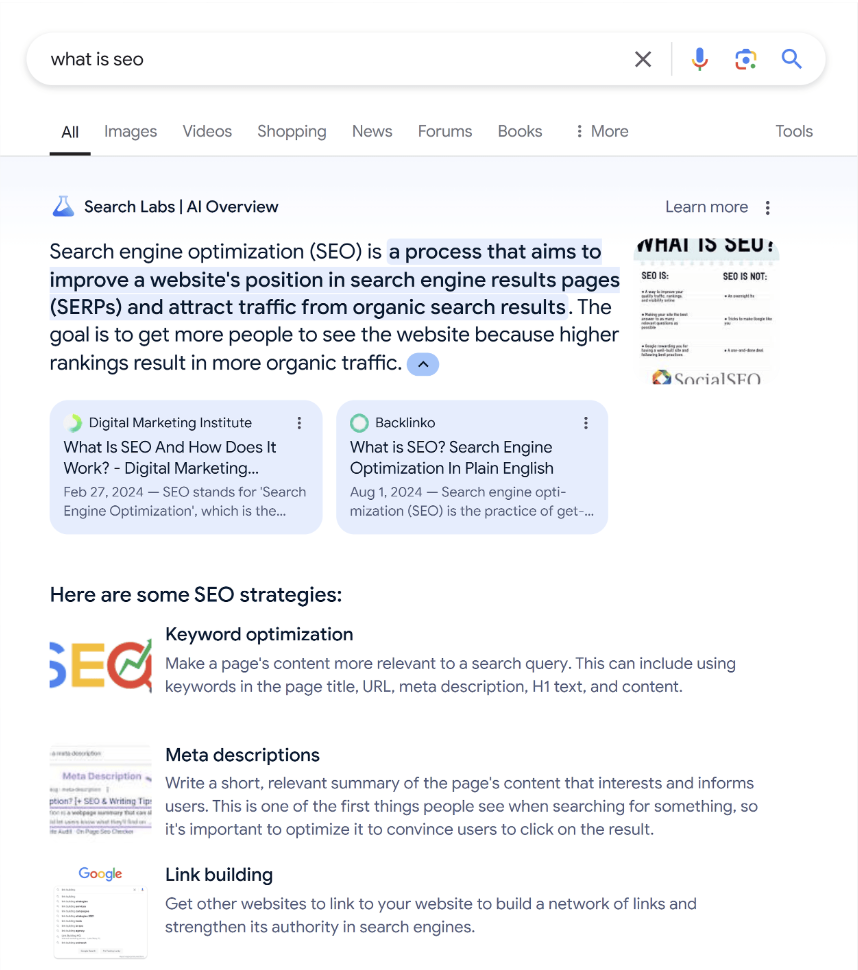
AI Overviews typically appear at the very top of Google’s search results, even above featured snippets. They include:
- A generated summary answering the query
- Links to the sources used
- Follow-up questions or related search suggestions
These results are triggered mostly for complex, informational, or multi-step queries, and are less common for simple, branded, or navigational searches.
What This Means for Brands
AI Overviews don’t fabricate content, they extract real facts and quotes from websites, often citing them. But:
- Not every query gets an AI Overview
- Not every source gets credited equally
That means if your brand relies on organic traffic from Google Search, it’s no longer just about ranking #1. It’s about being visible in the new AI Overview box, and that calls for a shift in strategy.
The Impact of AI Overview
With AI Overviews rolled out more widely, the way users engage with search is changing. This shift isn’t just cosmetic; it’s fundamentally altering how users access information and how brands get discovered.
How Google AI Overview Is Changing the Way Users Search
Before AI Overviews, searchers would skim titles, read meta descriptions, and click through multiple websites to piece together an answer.
Now? Google does the research for them.
- Search behavior is shifting: Users are becoming more passive. Instead of browsing through results, they scan the AI-generated summary and often don’t scroll further.
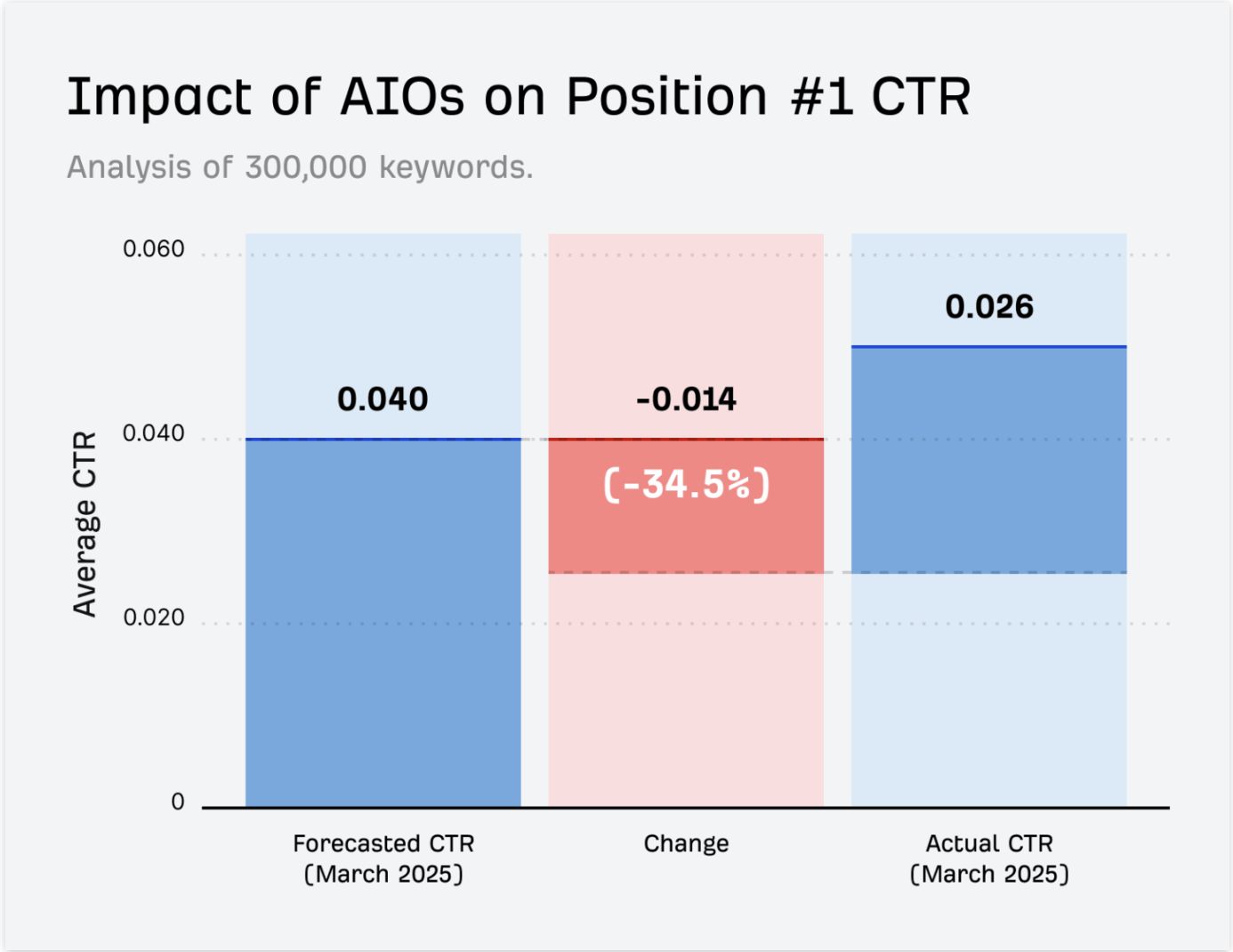
- Clicks are dropping: A study has shown that the presence of AI Overviews in the search results correlated with a 34.5% lower average clickthrough rate (CTR) for the top ranking page, compared to similar informational keywords without AI Overviews.
- First impressions happen earlier: Your brand’s first touchpoint may now be a sentence inside AI Overviews, not your homepage or headline.
Challenges for Businesses
For marketers and business owners, AI Overviews introduces a new set of challenges:
- Reduced traffic, even with high rankings: Your site might still rank on page one, but if your content isn’t featured in AI Overviews, users may find the answer they need before ever seeing your link.
- Content attribution concerns: AI may paraphrase your content without clearly linking to it, making it harder to get credit for original insights.
- Inconsistent visibility: AI Overviews don’t appear for every search, and the sources cited can change frequently. As such, tracking performance becomes tricky.
Opportunities for Businesses
Despite the challenges, AI Overviews also open new doors for agile brands:
- Visibility without ranking #1: Even if you’re not in the top organic spot, being quoted in the AI Overview gives you access to the same audience.
- Cited sources gain trust: Being referenced by Google’s AI signals authority and boosts brand perceptions.
- Content discoverability beyond links: AI Overviews summarize helpful content, even from forum posts, FAQs, and lesser-known pages. That means quality and relevance now matter more than sheer ranking power.
With the right strategy, AI Overviews can become a new source of high-impact visibility.
How to Optimise for Google AI Overviews
Getting featured in an AI Overview isn’t about shortcuts, it’s about making your content genuinely helpful, well-structured, and credible. Think of it as preparing your content to be “quoted” by Google’s AI.
Here’s how to give your website the best shot at being included:
Optimise for Featured Snippets and Knowledge Panels
AI Overviews are often built on the same signals used for featured snippets and knowledge panels. You should:
- Answer questions directly and clearly near the top of your content.
- Use structured headers like “What is…” or “How to…” followed by short, factual responses.
- Format with bullet points or numbered lists to break down steps or summarize key information.
- Add FAQs to match search intent and trigger snippet-style displays.
Optimise for E-E-A-T and YMYL
Google evaluates content quality using E-E-A-T (Experience, Expertise, Authoritativeness, Trustworthiness), especially for YMYL (Your Money or Your Life) topics like health, finance, or legal advice.
To improve E-E-A-T:
- Include author bios and credentials to demonstrate the expertise or authority of the creator of the content, where necessary.
- If author-level expertise isn’t relevant, focus on building your brand’s online reputation and recognition across authoritative platforms.
- Earn backlinks or mentions from reputable sources in your industry to strengthen PageRank, Trust and Authoritativeness.
- Align content with Google’s quality guidelines (Check out Amit Singhal’s Panda questions or Stanford’s web credibility principles – Use them as a checklist to refine your content’s quality).
Go for Relevant Queries and Long-Tail Keywords
Broad keywords are still important, but long-tail and question-based keywords are where AI Overviews thrive. These keywords:
- Have lower search volume and competition levels.
- Are more likely to trigger AI summaries
- For example,“how to choose black shoes for men” instead of “black shoes” or even “shoes.”
Use tools like Google Search Console, AnswerThePublic, or AlsoAsked.com to identify queries your audience actually searches. Write in a natural, conversational tone that mirrors how people ask questions.
Enhance User Experience
AI Overviews pull from websites that are fast, readable, and mobile-friendly.
Prioritise:
- Mobile-first design for seamless browsing
- Fast load times
- Clear content hierarchy with proper headers and internal links
Structure Your Content for Scannability
Make it easy for Google’s AI to parse your page:
- Summarize key points at the top of long-form content
- Use takeaway boxes, lists, and subheadings
- Internally link to related articles to build topical relevance
Match Structured Data to Visible Content
Structured data helps Google interpret your page accurately and enables rich results.
Ensure:
- All the content in your markup is visible on the page and
- Your structured data markup is validated.
Structured data gives Google’s AI the confidence to surface your content, accurately and prominently.
Ensure Your Technical SEO Is On Point
Since strong organic rankings often influence whether your content is featured in AI Overviews, technical SEO remains foundational.
Focus on:
- User-focused keyword research
- Original, intent-driven content
- Optimising Core Web Vitals
- Clean, mobile-optimised design
Even the best content won’t appear in AI Overviews if your site loads slowly or fails to meet technical benchmarks.
Adapting to the New Search Landscape
With AI Overviews changing how people search and discover information, businesses need to do more than just tweak a few keywords. This is about staying agile, future-proofing your digital presence, and understanding that Google is just one piece of a much bigger puzzle.

Regularly Update and Maintain Your Content Quality
AI Overviews pull from fresh, relevant, and authoritative content. If your website hasn’t been updated in months (or years), chances are you’re not showing up.
Here’s what to focus on:
- Refresh old content: Update stats, links and insights to maintain relevance.
- Remove outdated references or low-value pages that no longer serve a clear purpose
- Publishing regularly helps build topical authority and keeps your site active in the eyes of both users and algorithms.
Continue Ranking Well on Google’s SERPs
Even though AI Overviews grab a lot of attention, the traditional search engine results pages (SERPs) still matter, especially for transactional or branded searches.
- Keep optimising title tags and meta descriptions for strong CTR.
- Use internal linking to help Google understand site structure.
- Build content hubs and pillar pages to establish authority in key topics.
Optimise for Other Google Systems (Not Just AI Overviews)
Search doesn’t happen in a vacuum. People discover content on YouTube, Google Discover, Google News, forums, Reddit, and increasingly, through social media.
Broaden your digital presence:
- Publish short-form video content on YouTube (which is owned by Google and frequently surfaces in search).
- Share content across Facebook, LinkedIn, and TikTok, where engagement and shares may influence search relevance over time
AI Overviews already draws from diverse content sources. A strong multi channel presence amplifies your reach, strengthens brand credibility, and boosts your chances of being featured.
Final Thoughts on Navigating AI-Powered Search
Google’s AI Overviews mark a turning point in how users interact with search, favoring fast, credible answers over clicks. If you want your brand to stay visible, your content must go beyond ranking well; it must be clear, trusted, and reference-worthy.
At Red2 Digital, we help brands stay ahead of search innovation. If you’re ready to adapt to AI-powered search and build a strategy for long-term visibility, contact us today and let’s future-proof your digital presence together.
Frequently Asked Questions
How often are AI Overviews updated?
Google AI Overviews are updated continuously, based on changes in search intent, content availability, and algorithmic adjustments. That means your visibility can change weekly, or even daily, depending on how fresh and relevant your content is.
Is Google AI Overviews accurate?
Generally yes – but it’s not perfect. Google emphasizes that AI Overviews are designed to be informational, not advisory, especially for sensitive topics like health or finance. The information is drawn from multiple trusted sources, but it’s still wise to verify claims independently.
Can I opt out of ranking for AI Overviews?
Google currently provides no specific mechanism for opting out of AI Overviews, but site owners can remove content if desired by using appropriate directives like noindex or updating page preferences.
Can I remove my content from AI Overviews?
Google doesn’t offer a dedicated way to opt out of AI Overviews, but site owners can use directives like noindex to block content from being included. However, this is generally not advised unless there’s a strong reason to keep your content out of AI summaries.


