
RED² Insight
Why Google AI Overviews in 2026 Matter More Than Ever (And What It Means for You)
Discover how Google AI Overviews is transforming the way search works and learn what steps you must take to keep your content visible in 2025 and beyond.
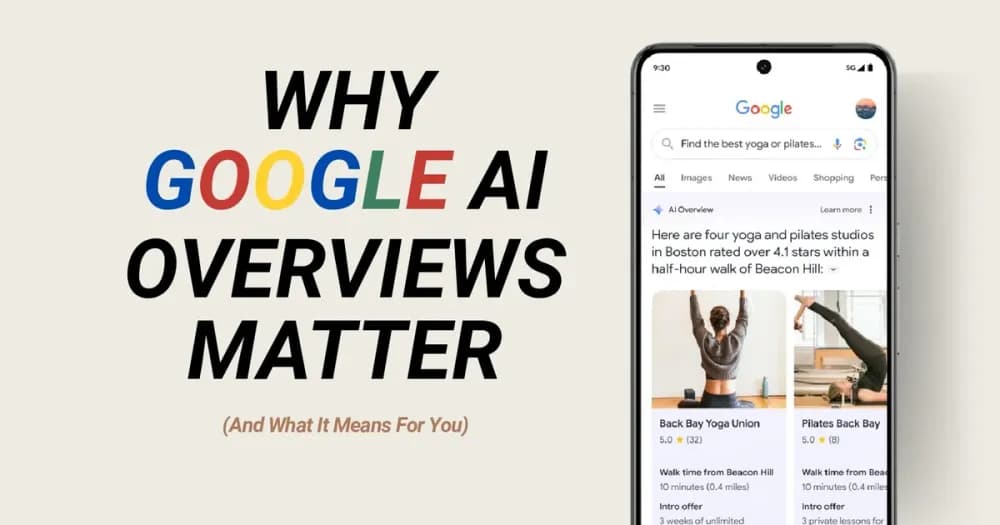
What is AI Overviews and How Does It Work?
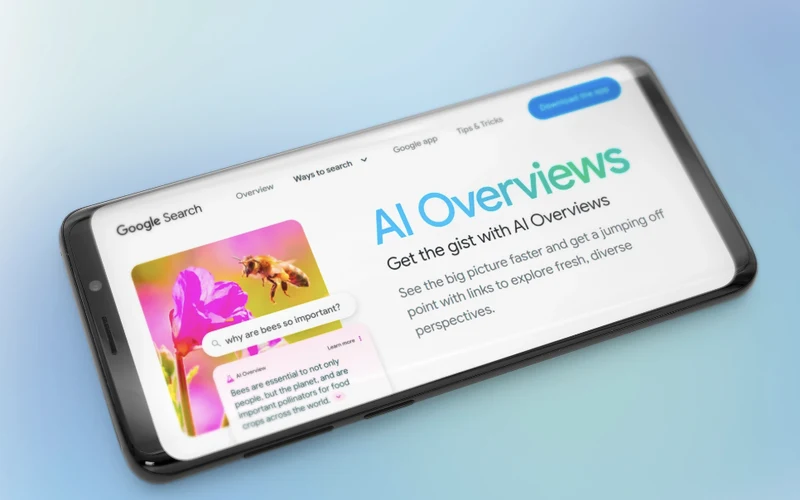
If you’ve recently Googled a question and noticed a neatly summarised answer box at the top of the page, you’ve likely encountered Google’s AI Overviews (AIO). It’s Google’s latest attempt to reshape how we interact with search results, one that uses generative AI to pull insights from across the web and deliver concise, contextual answers directly within the search interface.
How Did AI Overviews Come About?
Google first introduced its AI-powered snapshot feature during Google I/O 2023 under the Search Generative Experience (SGE). Initially limited to Search Labs, the experiment allowed early users to test AI-generated summaries alongside traditional search results. By mid-2024, it was rebranded and rolled out more widely as “AI Overviews.
This shift is part of Google’s ongoing mission to make search more intuitive and conversational. According to Google, the idea is to help users complete more complex tasks faster, like comparing products, planning trips, or understanding multifaceted topics, without needing to click through multiple sites.
Powered by Google’s Gemini models, AI Overviews are designed to understand intent and deliver summarised insights drawn from multiple high-quality sources. Think of it as your AI research assistant, scanning the web and giving you a quick, trustworthy briefing.
Where Do AI Overviews Appear?
AI Overviews typically appear at the very top of Google’s search results, even above featured snippets. They include:
- A generated summary answering the query
- Links to the sources used
- Follow-up questions or related search suggestions
These results are triggered mostly for complex, informational, or multi-step queries, and are less common for simple, branded, or navigational searches.
What This Means for Brands
AI Overviews don’t fabricate content, they extract real facts and quotes from websites, often citing them. But:
- Not every query gets an AI Overview
- Not every source gets credited equally
That means if your brand relies on organic traffic from Google Search, it’s no longer just about ranking #1. It’s about being visible in the new AI Overview box, and that calls for a shift in strategy.
The Impact of AI Overview
With AI Overviews rolled out more widely, the way users engage with search is changing. This shift isn’t just cosmetic; it’s fundamentally altering how users access information and how brands get discovered.
How Google AI Overview Is Changing the Way Users Search
Before AI Overviews, searchers would skim titles, read meta descriptions, and click through multiple websites to piece together an answer.
Now? Google does the research for them.
- Search behavior is shifting: Users are becoming more passive. Instead of browsing through results, they scan the AI-generated summary and often don’t scroll further.
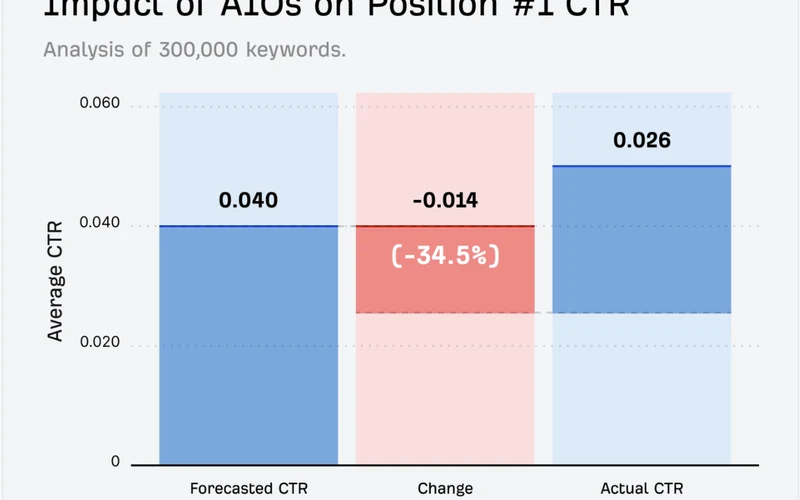
- Clicks are dropping: A study has shown that the presence of AI Overviews in the search results correlated with a 34.5% lower average clickthrough rate (CTR) for the top ranking page, compared to similar informational keywords without AI Overviews.
- First impressions happen earlier: Your brand’s first touchpoint may now be a sentence inside AI Overviews, not your homepage or headline.
Traditional SEO vs. GEO (Generative Engine Optimization)
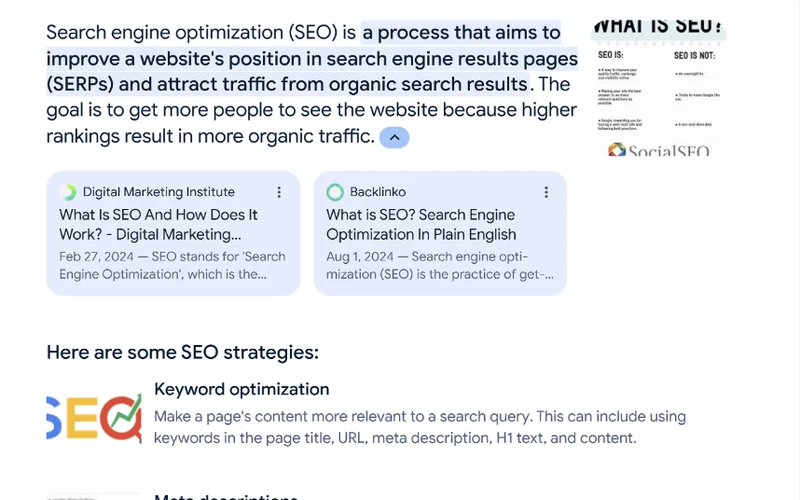
Traditional SEO optimizes to rank a URL as high as possible in a list of blue links, success is measured by position and click-through rate. GEO (Generative Engine Optimization) optimizes to get content cited or summarized inside an AI-generated answer itself, an AI Overview, a ChatGPT response, a Perplexity summary, success is measured by whether and how a brand is mentioned inside that answer, not by a ranking position. The 2 disciplines share a foundation (both still depend on crawlable, accurate, well-structured content) but they are not the same optimization target, content can rank well traditionally while being ignored by AI answer engines, and vice versa. A real, striking data point makes this concrete: one 500-query study found the correlation between Google ranking position and ChatGPT citation rate is just 0.034, functionally independent.
Challenges for Businesses
For marketers and business owners, AI Overviews introduces a new set of challenges:
- Reduced traffic, even with high rankings: Your site might still rank on page one, but if your content isn’t featured in AI Overviews, users may find the answer they need before ever seeing your link.
- Content attribution concerns: AI may paraphrase your content without clearly linking to it, making it harder to get credit for original insights.
- Inconsistent visibility: AI Overviews don’t appear for every search, and the sources cited can change frequently. As such, tracking performance becomes tricky.
Opportunities for Businesses
Despite the challenges, AI Overviews also open new doors for agile brands:
- **Visibility without ranking #1: **Even if you’re not in the top organic spot, being quoted in the AI Overview gives you access to the same audience.
- **Cited sources gain trust: **Being referenced by Google’s AI signals authority and boosts brand perceptions.
- Content discoverability beyond links: AI Overviews summarize helpful content, even from forum posts, FAQs, and lesser-known pages. That means quality and relevance now matter more than sheer ranking power.
With the right strategy, AI Overviews can become a new source of high-impact visibility.
How to Optimise for Google AI Overviews
Optimise for Featured Snippets and Knowledge Panels
AI Overviews are often built on the same signals used for featured snippets and knowledge panels. You should:
- Answer questions directly and clearly near the top of your content.
- Use structured headers like “What is…” or “How to…” followed by short, factual responses.
- Format with bullet points or numbered lists to break down steps or summarize key information.
- Add FAQs to match search intent and trigger snippet-style displays.
Optimise for E-E-A-T and YMYL
Google evaluates content quality using E-E-A-T (Experience, Expertise, Authoritativeness, Trustworthiness), especially for YMYL (Your Money or Your Life) topics like health, finance, or legal advice.
To improve E-E-A-T:
- Include author bios and credentials to demonstrate the expertise or authority of the creator of the content, where necessary.
- If author-level expertise isn’t relevant, focus on building your brand’s online reputation and recognition across authoritative platforms.
- Earn backlinks or mentions from reputable sources in your industry to strengthen PageRank, Trust and Authoritativeness.
- Align content with Google’s quality guidelines (Check out Amit Singhal’s Panda questions or Stanford’s web credibility principles – Use them as a checklist to refine your content’s quality).
Go for Relevant Queries and Long-Tail Keywords
Broad keywords are still important, but long-tail and question-based keywords are where AI Overviews thrive. These keywords:
- Have lower search volume and competition levels.
- Are more likely to trigger AI summaries
- For example,“how to choose black shoes for men” instead of “black shoes” or even “shoes.”
Use tools like Google Search Console, AnswerThePublic, or AlsoAsked.com to identify queries your audience actually searches. Write in a natural, conversational tone that mirrors how people ask questions.
Enhance User Experience
AI Overviews pull from websites that are fast, readable, and mobile-friendly.
Prioritise:
- Mobile-first design for seamless browsing
- Fast load times
- Clear content hierarchy with proper headers and internal links
Structure Your Content for Scannability
Make it easy for Google’s AI to parse your page:
- Summarize key points at the top of long-form content
- Use takeaway boxes, lists, and subheadings
- Internally link to related articles to build topical relevance
Develop Semantic Topic Clusters
Organize content around a comprehensive pillar page covering a topic broadly, supported by multiple focused cluster pages that each go deep on a related subtopic and link back to the pillar. This signals topical authority (that a site covers a subject thoroughly, not in scattered one-off posts) to both traditional search and AI systems, and Google's improved natural language processing makes this kind of meaningful content organization increasingly important for both ranking and AI citation.
Ensure Your Technical SEO Is On Point
Since strong organic rankings often influence whether your content is featured in AI Overviews, technical SEO remains foundational.
Focus on:
- User-focused keyword research
- Original, intent-driven content
- Optimising Core Web Vitals
- Clean, mobile-optimised design
Even the best content won’t appear in AI Overviews if your site loads slowly or fails to meet technical benchmarks.
Implement Deep Structured Data (Schema Markup)
Go beyond basic Article or FAQPage schema, implement the full range of schema types that genuinely apply to the content (Product, HowTo, Review, Organization with sameAs links to verified profiles). Deep, accurate structured data gives AI systems structured, verified information they can confidently reuse and attribute, thin or generic schema gives them nothing reliable to extract.
Regularly Update and Maintain Your Content Quality
AI Overviews pull from fresh, relevant, and authoritative content. If your website hasn’t been updated in months (or years), chances are you’re not showing up.
Here’s what to focus on:
- Refresh old content: Update stats, links and insights to maintain relevance.
- Remove outdated references or low-value pages that no longer serve a clear purpose
- Publishing regularly helps build topical authority and keeps your site active in the eyes of both users and algorithms.
Build a Verifiable Knowledge Graph (Entity SEO)
The real chain that leads to an AI Overview citation is entity establishment, Knowledge Graph inclusion, then citation: a brand needs to be resolved as a clear, verifiable entity, consistent naming, schema markup, sameAs links to Wikipedia/Wikidata or verified social profiles, before AI systems have a reliable signal to attribute claims to it, even if the underlying content is the most comprehensive source on the topic. Without this entity layer, AI systems have no confident way to cite a source by name.
How to Track Your AI Overview Rankings (AI Share of Voice)
AI Share of Voice measures how often a brand appears inside AI-generated answers compared with competitors, across Google AI Overviews, ChatGPT, Perplexity, Gemini, and other AI surfaces, tracked against a defined set of real prompts and topics. It is worth tracking as its own metric, not assumed from traditional rankings: AI Overviews name a brand in roughly 56.5% of tracked category prompts versus 85.4% for ChatGPT, meaning visibility varies significantly by platform, and the near-zero correlation between Google rank and AI citation (noted above) means a page can rank well without ever getting cited by an AI system, or the reverse. Dedicated tools for this (Ahrefs Brand Radar, Trakkr, Surfer, MaxAEO) report which prompts mention a brand and how it compares to named competitors, distinct from a standard rank tracker.
Final Thoughts on Navigating AI-Powered Search
Google’s AI Overviews mark a turning point in how users interact with search, favoring fast, credible answers over clicks. If you want your brand to stay visible, your content must go beyond ranking well; it must be clear, trusted, and reference-worthy.
At Red2 Digital, we help brands stay ahead of search innovation. If you’re ready to adapt to AI-powered search and build a strategy for long-term visibility, contact us today and let’s future-proof your digital presence together.
Frequently Asked Questions
-
How often are AI Overviews updated?
Google AI Overviews are updated **continuously**, based on changes in search intent, content availability, and algorithmic adjustments. That means your visibility can change weekly, or even daily, depending on how fresh and relevant your content is.
-
Is Google AI Overviews accurate?
Generally yes – but it’s not perfect. Google emphasizes that AI Overviews are designed to be informational, not advisory, especially for sensitive topics like health or finance. The information is drawn from multiple trusted sources, but it’s still wise to verify claims independently.
-
Does traditional SEO still matter?
Yes, traditional SEO and GEO are complementary, not competing, disciplines. Traditional rankings still drive the majority of organic clicks and remain the foundation AI systems crawl and learn from in the first place, and the near-zero correlation between Google rank and AI citation rate means strong traditional rankings do not automatically produce AI visibility, you need both. Abandoning traditional SEO to chase AI Overview citations alone would give up the larger, more reliable traffic source for a channel that is still actively evolving.
-
Can I remove my content from AI Overviews?
Google doesn’t offer a dedicated way to opt out of AI Overviews, but site owners can use directives like noindex to block content from being included. However, this is generally not advised unless there’s a strong reason to keep your content out of AI summaries.